
Table of Contents
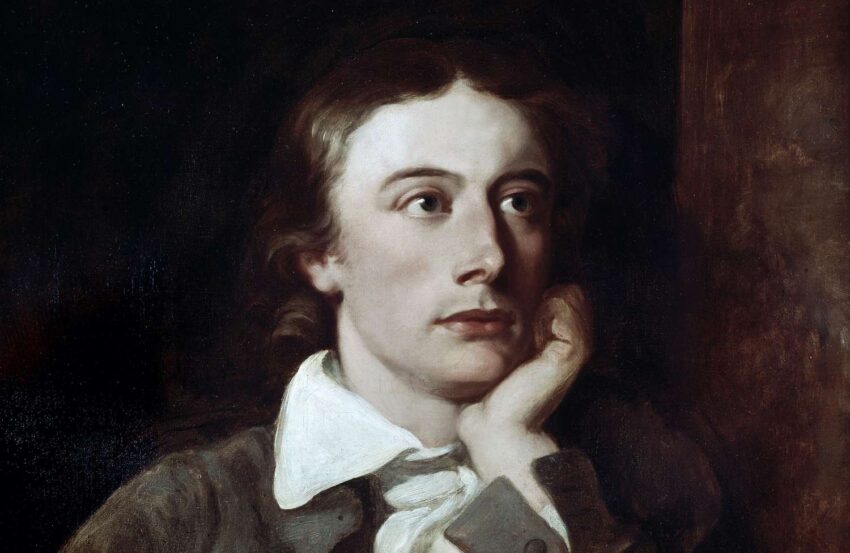
ToggleJohn Keats was one of the greatest poets of the English Romantic movement. Despite living only 25 years, he created some of the most celebrated poems in English literature.
His works are admired for their vivid imagery, emotional depth, and exploration of beauty, love, nature, and mortality. Today, Keats is regarded as one of the most influential poets in literary history.
Quick Facts
| Detail | Information |
|---|---|
| Full Name | John Keats |
| Birth Date | October 31, 1795 |
| Birth Place | London, England |
| Nationality | British |
| Profession | Poet |
| Literary Movement | Romanticism |
| Famous Works | Ode to a Nightingale, Ode on a Grecian Urn, To Autumn |
| Fiancée | Fanny Brawne |
| Death Date | February 23, 1821 |
| Age at Death | 25 Years |
| Place of Death | Rome, Italy |
Early Life
John Keats was born on October 31, 1795, in London, England. He was the eldest of four surviving children born to Thomas Keats and Frances Jennings Keats. His father worked as a stable manager, and the family lived a modest but comfortable life.
Tragedy struck early in Keats’s life. His father died in an accident in 1804 when John was only eight years old. A few years later, his mother died from tuberculosis in 1810. These losses deeply affected him and influenced the themes of suffering and mortality that later appeared in his poetry.
Education
Keats attended the Clarke School in Enfield, where he developed a love for literature and classical mythology. Although he showed academic promise, financial difficulties prevented him from pursuing a university education.
Instead, he trained as a surgeon and apothecary. He studied medicine at Guy’s Hospital and became a licensed medical practitioner in 1816. However, his passion for poetry eventually led him to abandon medicine and dedicate himself entirely to writing.
Beginning of His Literary Career
Keats’s literary career began in his early twenties. He became associated with influential writers and critics of the Romantic era, including Leigh Hunt, who encouraged his poetic ambitions.
His first volume of poetry, Poems (1817), received little attention. However, he continued writing and refining his craft. In 1818, he published Endymion, a long narrative poem famous for its opening line:
“A thing of beauty is a joy forever.”
Although critics initially attacked the poem, it demonstrated Keats’s remarkable imagination and lyrical talent.
Major Works
The Great Odes
In 1819, often considered his “annus mirabilis” (wonderful year), Keats wrote several masterpieces that secured his place in literary history:
- Ode to a Nightingale
- Ode on a Grecian Urn
- Ode on Melancholy
- To Autumn
- Ode to Psyche
These poems explore themes such as beauty, art, nature, imagination, and the fleeting nature of life.
Other Notable Poems
Some of Keats’s other famous works include:
- The Eve of St. Agnes
- Lamia
- Hyperion
- Isabella, or the Pot of Basil
His poetry is known for its rich sensory descriptions and emotional intensity.
Love Life
One of the most significant relationships in Keats’s life was with Fanny Brawne. The two became deeply attached, and their romance inspired many of Keats’s letters and poems.
Unfortunately, Keats’s poor health and financial struggles prevented them from marrying. Their correspondence remains among the most moving love letters in English literature.
Illness and Final Years
Like his mother and brother before him, Keats contracted tuberculosis. His health began deteriorating in 1820. Doctors advised him to move to a warmer climate, and he traveled to Rome, Italy, hoping to recover.
Sadly, his condition worsened, and he died on February 23, 1821, at the age of 25.
Keats was buried in Protestant Cemetery. His gravestone bears the famous inscription:
“Here lies one whose name was writ in water.”
At the time of his death, he believed his work would be forgotten. History proved otherwise.
Literary Style and Themes
John Keats’s poetry is characterized by:
- Rich imagery and symbolism
- Sensory descriptions
- Celebration of beauty
- Exploration of mortality
- Love of nature
- Classical and mythological influences
- Emotional depth
One of his most famous ideas was “Negative Capability,” the ability to accept uncertainty and mystery without seeking definite answers.
Legacy
Today, John Keats is considered one of the leading figures of the Romantic movement alongside:
- William Wordsworth
- Samuel Taylor Coleridge
- Percy Bysshe Shelley
- Lord Byron
His poems continue to be studied in schools and universities worldwide. Many critics now regard him as one of the finest lyric poets in the English language.
Frequently Asked Questions (FAQs)
Who was John Keats?
John Keats was an English Romantic poet known for his lyrical poetry and exploration of beauty, nature, and mortality.
Why is John Keats famous?
He is famous for masterpieces such as Ode to a Nightingale, Ode on a Grecian Urn, and To Autumn.
What was John Keats’s cause of death?
John Keats died from tuberculosis in 1821.
Who was Fanny Brawne?
Fanny Brawne was John Keats’s fiancée and the great love of his life.
What literary movement did John Keats belong to?
He was a major figure in the Romantic movement of English literature.
Conclusion
John Keats remains one of the most celebrated poets in world literature. Although his life was tragically short, his poetry continues to inspire readers with its beauty, imagination, and emotional power. His exploration of love, art, nature, and human mortality has ensured that his work remains timeless, securing his place among the greatest poets in history.