
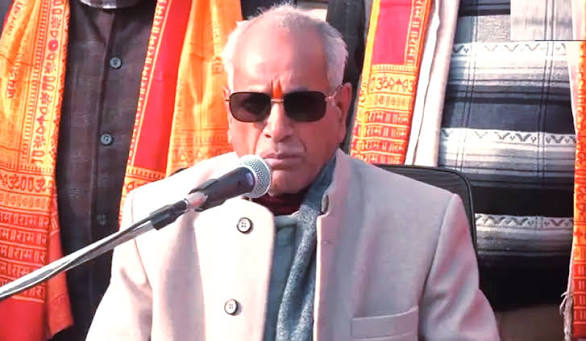
Champat Rai is a prominent Indian social and religious leader best known for his long association with the Ram Janmabhoomi movement and his role as the General Secretary of the Shri Ram Janmabhoomi Teerth Kshetra.
He has spent decades working with the Vishva Hindu Parishad (VHP) and is considered one of the key organizers behind the successful execution of the Ram Mandir project in Ayodhya.
Champat Rai is widely recognized for his organizational skills, meticulous documentation, and long-term commitment to religious and cultural causes. His contributions to the Ram Janmabhoomi movement have made him one of the most influential figures associated with the construction of the Ram Mandir.
Quick Facts
| Detail | Information |
|---|---|
| Full Name | Champat Rai |
| Nationality | Indian |
| Profession | Social Activist, Religious Leader, Administrator |
| Organization | Vishva Hindu Parishad (VHP) |
| Current Position | General Secretary, Shri Ram Janmabhoomi Teerth Kshetra |
| Known For | Ram Janmabhoomi Movement and Ram Mandir Construction |
| Residence | Originally from Nagina, Bijnor, Uttar Pradesh |
| Religion | Hinduism |
Early Life
Champat Rai was born in the state of Uttar Pradesh and is reported to be a resident of Nagina in the Bijnor district. Although detailed information regarding his exact birth date and family background is not widely available in public records, he grew up in a traditional Indian environment that emphasized education, discipline, and cultural values.
From an early age, he displayed a strong interest in social work and public service. His inclination toward community activities eventually led him to become associated with organizations dedicated to cultural and religious causes.
Education
Information regarding Champat Rai’s formal educational qualifications remains limited in publicly available sources. However, his extensive knowledge of historical records, legal documentation, organizational management, and social issues has earned him respect among supporters and colleagues.
Many observers note that his expertise comes not only from academic learning but also from decades of grassroots activism, research, and organizational experience.
Association with the Vishva Hindu Parishad (VHP)
One of the most significant aspects of Champat Rai’s life has been his long association with the Vishva Hindu Parishad.
Over the years, he rose through the ranks of the organization and became one of its most trusted leaders. His responsibilities included:
- Organizational planning
- Religious outreach
- Coordination of national campaigns
- Documentation and archival work
- Public communication
- Strategic management of cultural initiatives
He later became a senior leader and vice president within the organization. His leadership style is often described as disciplined, detail-oriented, and focused on long-term objectives.
Role in the Ram Janmabhoomi Movement
Early Involvement
Champat Rai was deeply involved in the Ram Janmabhoomi movement for several decades. The movement sought the construction of a temple dedicated to Lord Ram at the site believed by many Hindus to be Ram’s birthplace in Ayodhya.
During the prolonged legal and social campaign, Rai played an important role in:
- Collecting historical evidence
- Maintaining documentation
- Coordinating activists
- Supporting legal efforts
- Managing communication among stakeholders
His contribution to gathering and organizing records became particularly significant during the legal proceedings surrounding the Ayodhya dispute.
The “Encyclopedia of Ayodhya”
Several reports have described Champat Rai as an “encyclopedia of Ayodhya” because of his extensive knowledge of the Ram Janmabhoomi issue and the historical records connected to it. His ability to recall details, documents, and developments over many years made him a valuable resource during the movement.
Appointment as General Secretary of the Ram Janmabhoomi Trust
Following the 2019 Supreme Court verdict on the Ayodhya dispute, the Government of India established the Shri Ram Janmabhoomi Teerth Kshetra Trust in February 2020 to oversee the construction and management of the Ram Mandir.
On February 19, 2020, Champat Rai was unanimously elected as the General Secretary of the Trust. The position placed him at the center of one of India’s most significant religious construction projects.
His responsibilities include:
- Supervising construction progress
- Coordinating contractors and consultants
- Managing trust operations
- Communicating project updates
- Overseeing fundraising initiatives
- Maintaining transparency in administration
Contribution to Ram Mandir Construction
Since the groundbreaking ceremony in August 2020, Champat Rai has played a key role in monitoring the temple’s development.
His involvement includes:
Project Coordination
He worked closely with engineers, architects, consultants, and trust members to ensure that the construction progressed according to schedule.
Public Communication
Champat Rai regularly addressed the media and devotees regarding project milestones, donations, and construction updates.
Resource Management
The temple project involved contributions from numerous states, organizations, artisans, and individuals across India. Rai frequently highlighted the collaborative nature of the project.
Documentation
His commitment to preserving historical records and project documentation has been a hallmark of his work throughout the temple construction process.
Leadership Style
Champat Rai’s leadership is characterized by:
Attention to Detail
He is known for maintaining extensive records and ensuring accuracy in documentation.
Long-Term Vision
Rather than focusing solely on short-term objectives, he has consistently emphasized sustainable institutional development.
Organizational Discipline
Colleagues frequently describe him as methodical and highly organized.
Commitment to Cultural Preservation
Much of his work centers on preserving and promoting India’s religious and cultural heritage.
Public Recognition and Influence
The completion and consecration of the Ram Mandir significantly increased public recognition of Champat Rai. During the lead-up to the temple’s consecration ceremony in January 2024, he became one of the most visible spokespersons for the project.
His influence extends beyond temple administration and includes broader discussions on religious institutions, cultural preservation, and social organization.
Personal Life
Compared to many public figures, Champat Rai maintains a relatively private personal life. Public information about his family, spouse, or children is limited.
Instead, his public identity is largely associated with:
- Religious service
- Organizational leadership
- Social activism
- Cultural preservation
- Temple administration
For decades, his work has remained centered on institutional and community initiatives rather than personal publicity.
Challenges and Controversies
Like many prominent public figures involved in major religious and social movements, Champat Rai has occasionally been at the center of public debates and criticism.
However, supporters often point to his decades-long involvement in the Ram Janmabhoomi movement and his extensive organizational experience as evidence of his commitment to the causes he represents.
Legacy
Champat Rai’s legacy is closely tied to the successful construction of the Ram Mandir in Ayodhya.
Historians and observers of contemporary Indian religious movements are likely to remember him for:
- His role in the Ram Janmabhoomi movement
- His documentation of historical evidence
- His leadership within the Vishva Hindu Parishad
- His administrative role in the Ram Mandir project
- His contribution to one of modern India’s most significant religious developments
Frequently Asked Questions (FAQs)
Who is Champat Rai?
Champat Rai is an Indian social and religious leader, VHP leader, and the General Secretary of the Shri Ram Janmabhoomi Teerth Kshetra Trust.
Why is Champat Rai famous?
He is famous for his decades-long involvement in the Ram Janmabhoomi movement and his leadership role in the construction of the Ram Mandir in Ayodhya.
What position does Champat Rai hold?
He serves as the General Secretary of the Shri Ram Janmabhoomi Teerth Kshetra Trust.
What organization is Champat Rai associated with?
He has long been associated with the Vishva Hindu Parishad (VHP).
What is Champat Rai’s role in Ram Mandir construction?
He oversees administrative coordination, project management, communication, and operational activities related to the Ram Mandir project.
Conclusion
Champat Rai is one of the most influential figures associated with the Ram Janmabhoomi movement and the construction of the Ram Mandir. Through decades of organizational work, documentation, and leadership, he emerged as a key architect of the institutional framework that ultimately oversaw the temple’s construction. His career reflects a long commitment to religious activism, cultural preservation, and organizational leadership, making him a significant figure in contemporary Indian public life.